

Stop the Pain: How Exercise Protects Your Teeth from Bruxism
You know how the saying goes, sadness can't hit a moving target. Stress works the same way: the longer you stay stuck, the more your body holds onto it. And one of the worst ways it shows up? Teeth grinding and jaw clenching — also known as bruxism.
In this blog, we'll explore the connection between stress and bruxism, how exercise can help manage both stress and teeth grinding, and how ClearClub provides an extra layer of bruxism relief as you work exercise into your routine.
📑 Table of Contents
Stress-Related Teeth Grinding and Bruxism Explained
Stress is one of the body's most common responses — but when it piles up, it can show up in unexpected ways, like bruxism. Teeth grinding and jaw clenching not only damage your smile but can also disturb your sleep.
Research published in the Journal of Clinical Medicine shows that stress affects areas of the brain, including the hippocampus and the mesocortical dopaminergic pathway. When these regions are weakened, your body's ability to control sudden movements, like jaw clenching, can be impaired.
Moreover, lifestyle choices can make things worse. Skipping sleep, munching on junk food, chugging sugary drinks, or diving into high-stress activities can push cortisol levels higher.
The good news? Studies show that people who wear a night guard for bruxism often have lower cortisol levels than those who don't — meaning a simple mouthguard can help your body relax and reduce stress-related teeth grinding. Pairing consistent exercises for bruxism with a night guard can strengthen your stress response and help reduce teeth grinding or clenching.
5 Benefits of Exercise for Stress-Related Bruxism
Exercise offers benefits beyond the physical — it can boost your mental and emotional well-being too. Here are 5 ways it can help people manage bruxism.
Lessens Overall Stress and Tension

Boosts Sleep Quality

Relaxes Jaw Muscles

-
Relaxed jaw exercise - Rest your tongue on the roof of your mouth, let your teeth part naturally while relaxing your jaw, and open your mouth comfortably. Repeat as needed.
- Goldfish exercise (partially opened) - Rest your tongue on the roof of your mouth. Put one finger near your TMJ and another on your chin. Lower your jaw halfway, then close slowly.
- Goldfish exercise (fully opened) - Follow the same steps as the Goldfish exercise (partially opened), but open your mouth fully before closing it.
- Chin tucks - Square your shoulders, tuck your chin into a double-chin position, and hold for three seconds. Repeat this sequence 10 times.
- Resisted opening of the mouth - Place your thumb under your chin and slowly open your mouth, feeling gentle resistance. Hold for 3-6 seconds, then close. Repeat 10 times.
-
Resisted closing of the mouth - Gently squeeze your chin with your thumb and index finger while keeping your mouth closed. Repeat 10 times.
- Side-to-side jaw movement - Place a ¼-inch object (e.g., stacked tongue depressors) between your front teeth. Move your jaw side to side, holding each end of the motion for 2-3 seconds, and repeat 10 times on each side.
- Forward jaw movement - Place a ¼-inch object between your front teeth and move your lower jaw forward so your bottom teeth come in front of your top teeth. Hold for 2-3 seconds at each end of the movement, and repeat 10 times.
Improves Mood and Mental Resilience

Notice how after a workout you feel lighter, more confident, and strangely recharged? That's the endorphins kicking in. According to the Cleveland Clinic, these feel-good chemicals don't just reduce anxiety, depression, and bad moods — they can even boost your self-image.
And in psychology, self-image is a big deal. It shapes how you see yourself, how capable you feel, how you handle relationships, and how you deal with conflict. When someone has a poor self-image, they struggle more with identity, community, and even opportunities that come their way.
That kind of negative self-perception creates unnecessary stress — one of the biggest triggers for bruxism.
Want to boost your mood and tackle teeth grinding? Check out this list next: Seven Hacks for Managing Stress (And Bruxism, Too)
Practices Better Posture and Body Awareness

- Child's pose
- Forward fold
- Cat-Cow
- Standing Cat-Cow
- Chest opener
- High plank
- Side plank
- Downward-Facing Dog
- Pigeon Pose
- Thoracic spine rotation
- Glute bridge
- Isometric pulls
On top of that, being in tune with your body — practicing body awareness — can lift your mood and help you handle things like low self-esteem, stress, or emotional ups and downs. All of these can make it easier to cope with bruxism over time.
How Dental Guards Support Your Fight Against Bruxism
There are two types of protective devices you can use when dealing with teeth grinding and clenching. First, during high-intensity workouts, it's normal for your body to cope with physical strain by clenching your teeth. This is where a sports mouth guard comes in: it absorbs the pressure from your jaw during exercise and protects your teeth from impact.
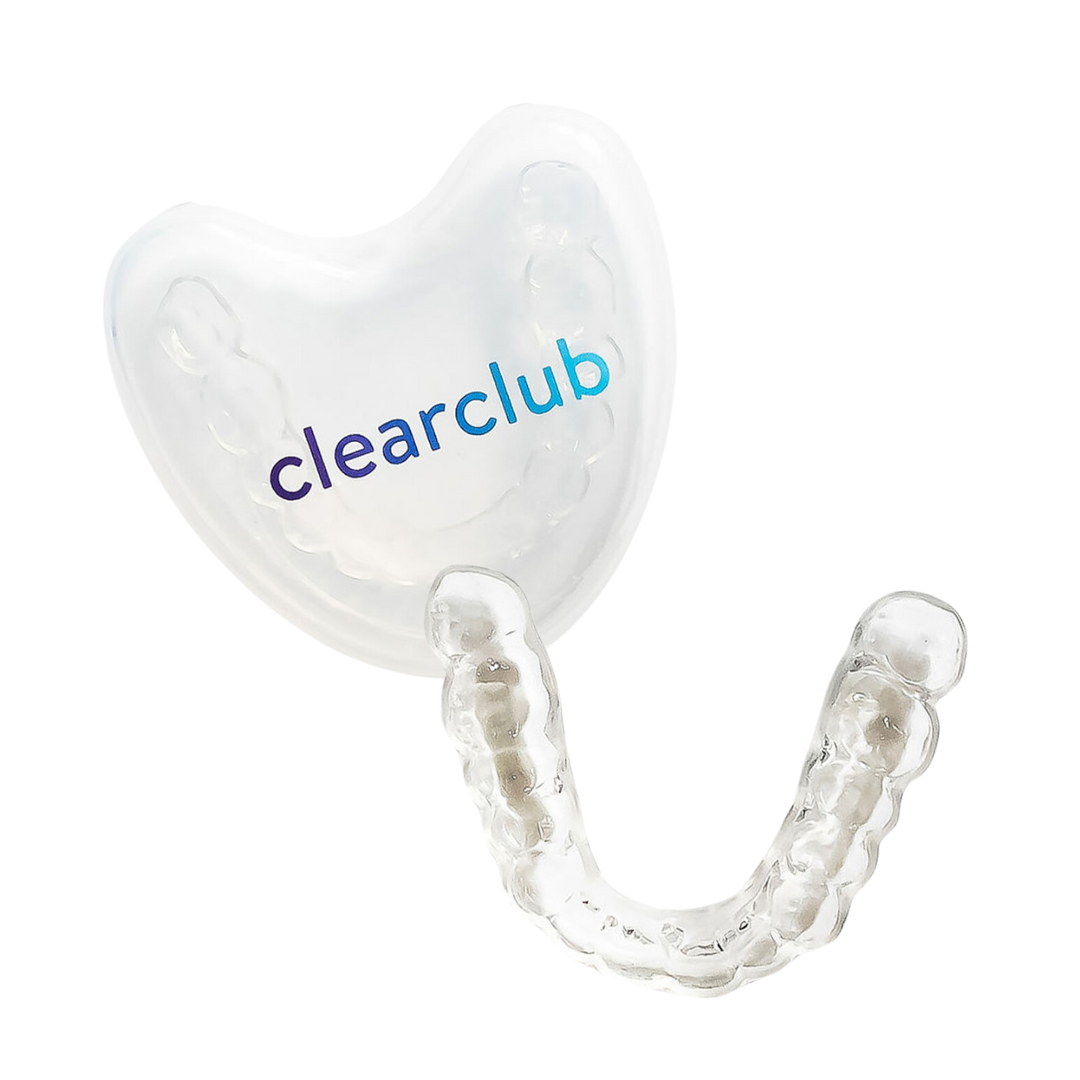
Second, if stress-related clenching continues at night, a dental night guard can help manage the effects of bruxism and prevent further wear on your teeth. It's slimmer, less bulky, and comfortable enough to wear overnight without affecting your breathing. Using both devices for their intended purpose can help prevent tooth damage, headaches, and jaw pain.
Your Teeth Deserve Better — Grab a ClearClub Night Guard Today
If your jaw's been fighting battles you didn't sign up for, it's time to gear up properly. Protect your teeth from clenching during workouts with our Custom Sports Mouth Guard, which has a soft interior and exterior and 4.5 mm thickness for reliable protection during intense training or contact activities.


Frequently Asked Questions
❓ Can exercise really help reduce teeth grinding?
Yes. Exercise can help reduce stress and improve sleep quality—two major triggers of bruxism. While it may not completely stop teeth grinding, regular activity can help minimize and manage its symptoms.
❓ What are the benefits of exercise for those who suffer from bruxism?
Regular exercise can help reduce stress for those who grind their teeth. When done consistently, it can: reduce overall stress and release tension, boost sleep quality, relax jaw muscles, improve emotional regulation and mental resilience, and enhance body posture and awareness.
❓ Are there risks to exercising with bruxism?
The main risk is jaw strain or accidental clenching during high-intensity workouts. To protect your teeth, you can wear a custom sports mouth guard. It helps minimize the risk and gives you the peace of mind you need while finishing your sets.
Looking for something else? Check our full FAQs section.